


The resurfacing of Elmstead Lane last week would not have gone unnoticed by local residents. Over three days last week, beginning on Monday, workers dug, scooped, laid, rolled, painted, and sweated all over our road, leaving us with a pristine jet-black surface to enjoy as we glide, foot off the accelerator, down the hill to Elmstead Woods station.
How exactly did they do it? Where did the rubble go? And considering the number of Thames water issues we have on the road, how long will this new surface remain new?
The Chislehurst Observer Investigates…
How to resurface a road?
Of all the machines parked on Elmstead Lane this week, there are five that I need to draw your attention to.


1. The Planer:
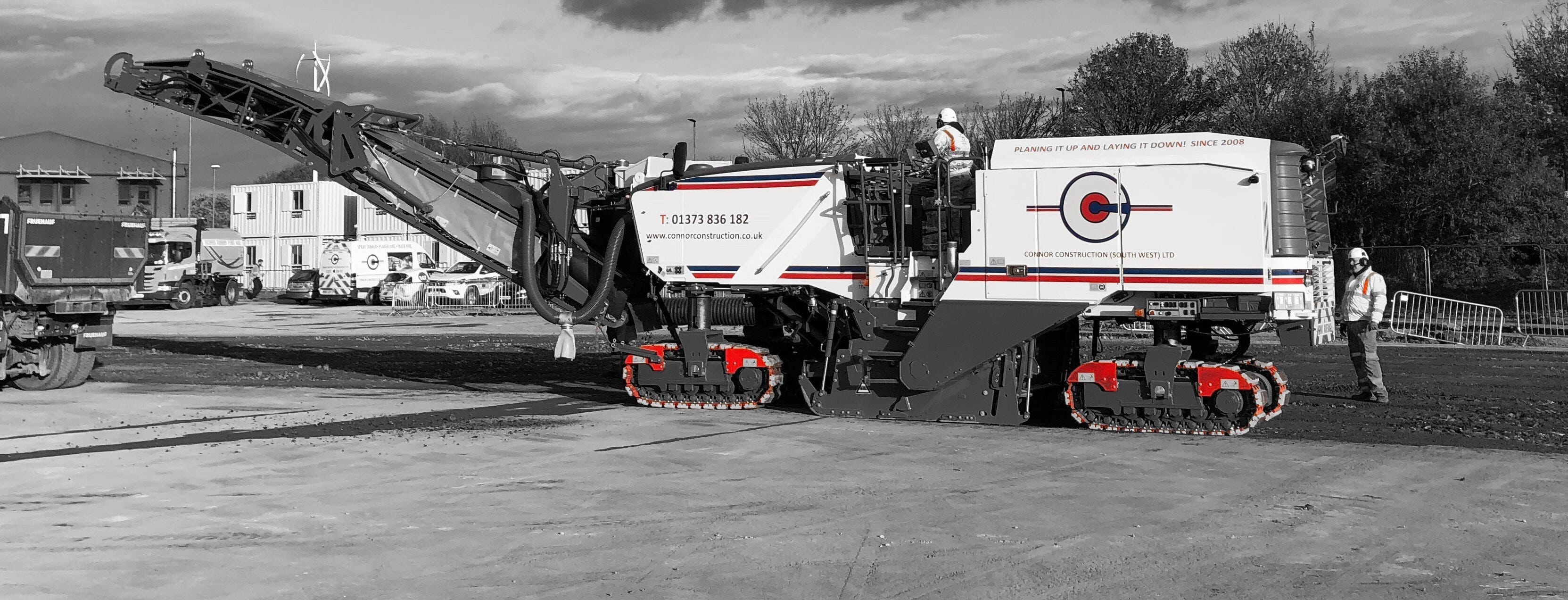
This monster machine (sorry didn’t snap an image) is designed to scoop up the old road. It does so in 2-meter sections using a combination of water, a serrated metal roller, and raw power. It moves on four rubberised tracks at a frighteningly high speed of 5 mph. Above it, a conveyor belt, some 4 meters long, arches like a long dragon neck, spewing forth the asphalt, also known as ‘planing,’ into a truck ready to receive it. According to the National Planing Association, “planings are collected then reused in new asphalt or in surface applications such as pathways and farm tracks.” One worker told me, “we’ll lift 200 tonnes of asphalt off the road over the coming days and plan to fill around 12 trucks.”
2. The Sweeper:
Next, an industrial sweeper cleans the road of rubble and other debris left in the planer's wake.
3. The Bitumen Van:
After the road is cleaned and swept, a smaller vehicle pours heated bitumen (pronounced "bitch-you-men") onto it, which acts as a glue for the asphalt layer. Bitumen is found both naturally (the largest known deposit being a lake in Trinidad) and can also be derived from crude oil. Confusingly, Americans refer to bitumen as asphalt. Presumably, this is because it is one of the main ingredients in the mixture of sand, stones, and bitumen that makes up asphalt. However, just like an egg is not a cake, I think it best to be accurate.
Whatever you do, don’t confuse any of this with tarmac. Short for Tarmacadam, tarmac is a combination of similar substances, but tar is used instead of bitumen. Effectively, it’s the first cousin once removed of bitumen but is less popular in road surfacing nowadays.
4. The Paver:
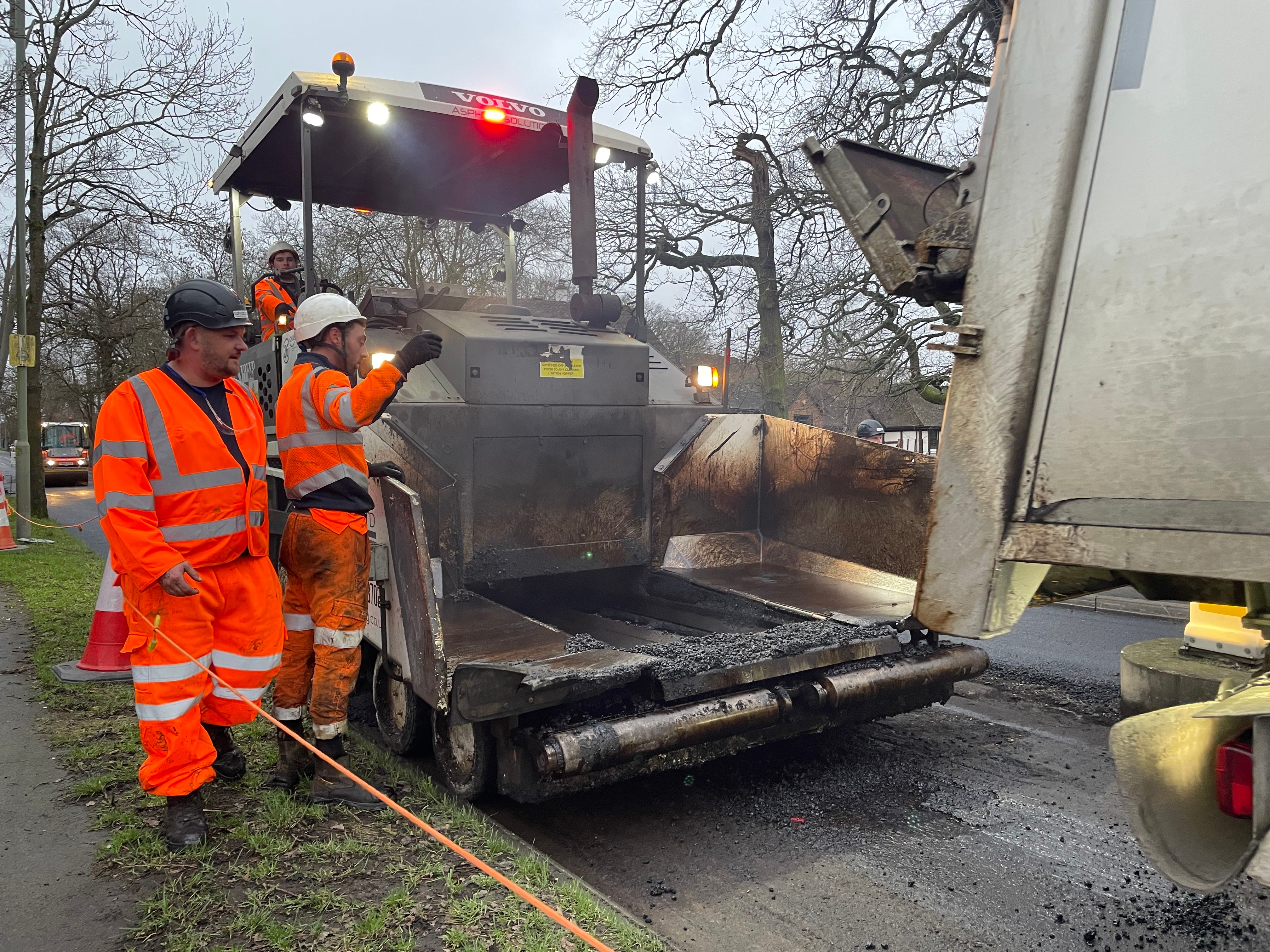
The second of the two large machine monsters you may have seen was the paver. This machine pours and presses heated asphalt onto the road. Workers are on hand to spread it out, ready for the final stage. This is hot work. Even walking past at this stage warmed our faces. To say their sweat literally went into our road is no exaggeration.
5. The Roller:
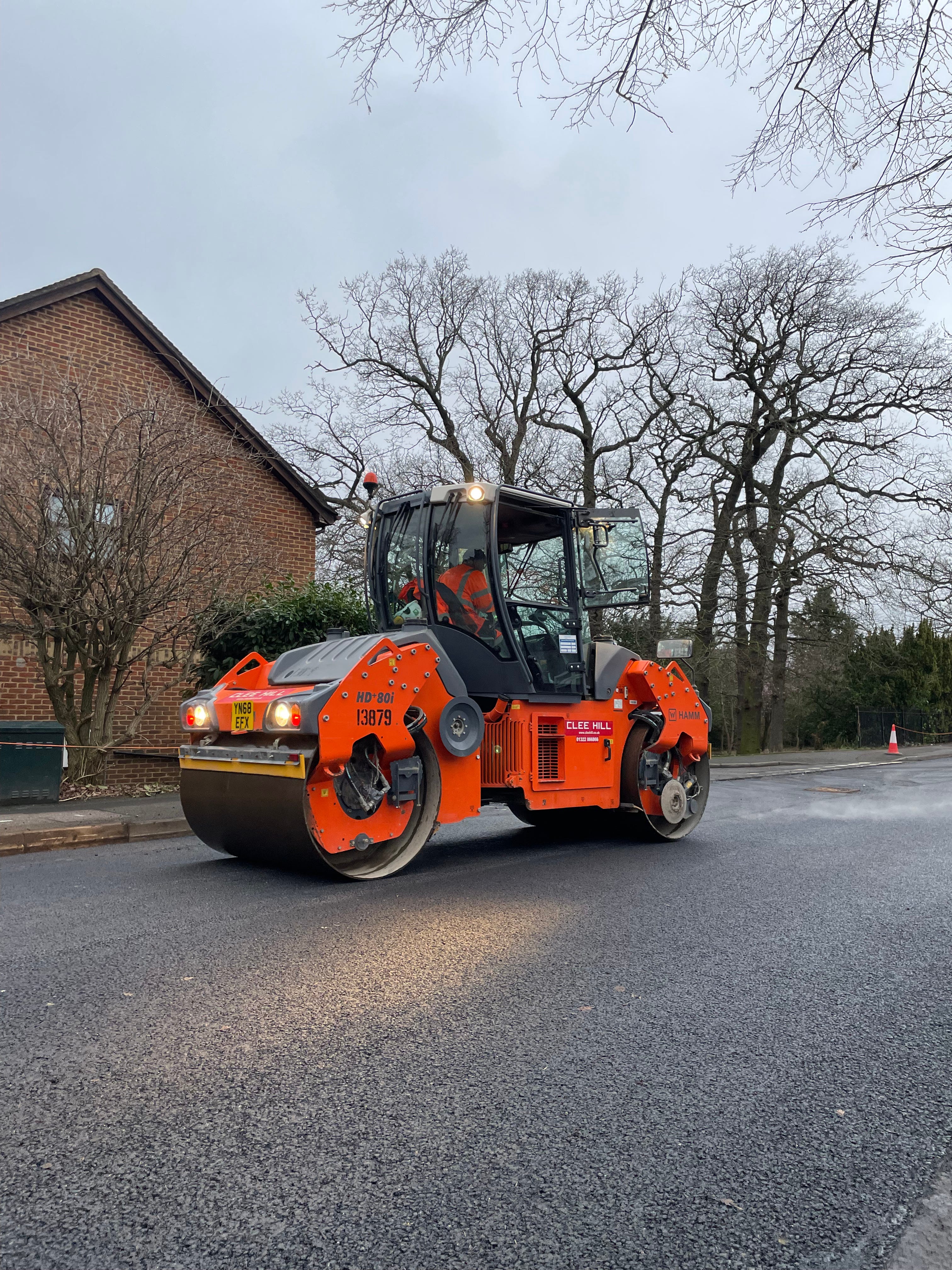
Finally, a double drum roller, also aptly named the “compactor,” flattens the road. You don’t want to get your foot stuck under one of these 3.5-tonne drums. Once compressed and cooled, the road is painted. I say paint, but really it’s melted thermoplastic that is skillfully poured onto the road. Drying quickly and sticking solid to the road, the only way to get it off is with a blowtorch.
The end result: A beautiful new black road…
But how long will it last?
Anyone living near the road would have noticed the near-comical regularity of water works on the road last year due to burst pipes.
Local MP Bob Neill put this down to the high percentage of iron pipes and variations in water temperature. Assuming these pipes still exist and the water temperature will change with the temperature, then I give it 3 months before our road is turned back into a patchwork of puddles and off-coloured asphalt patches.
I could be cynical, but as they say, “all roads must come to an end” sooner or later.