


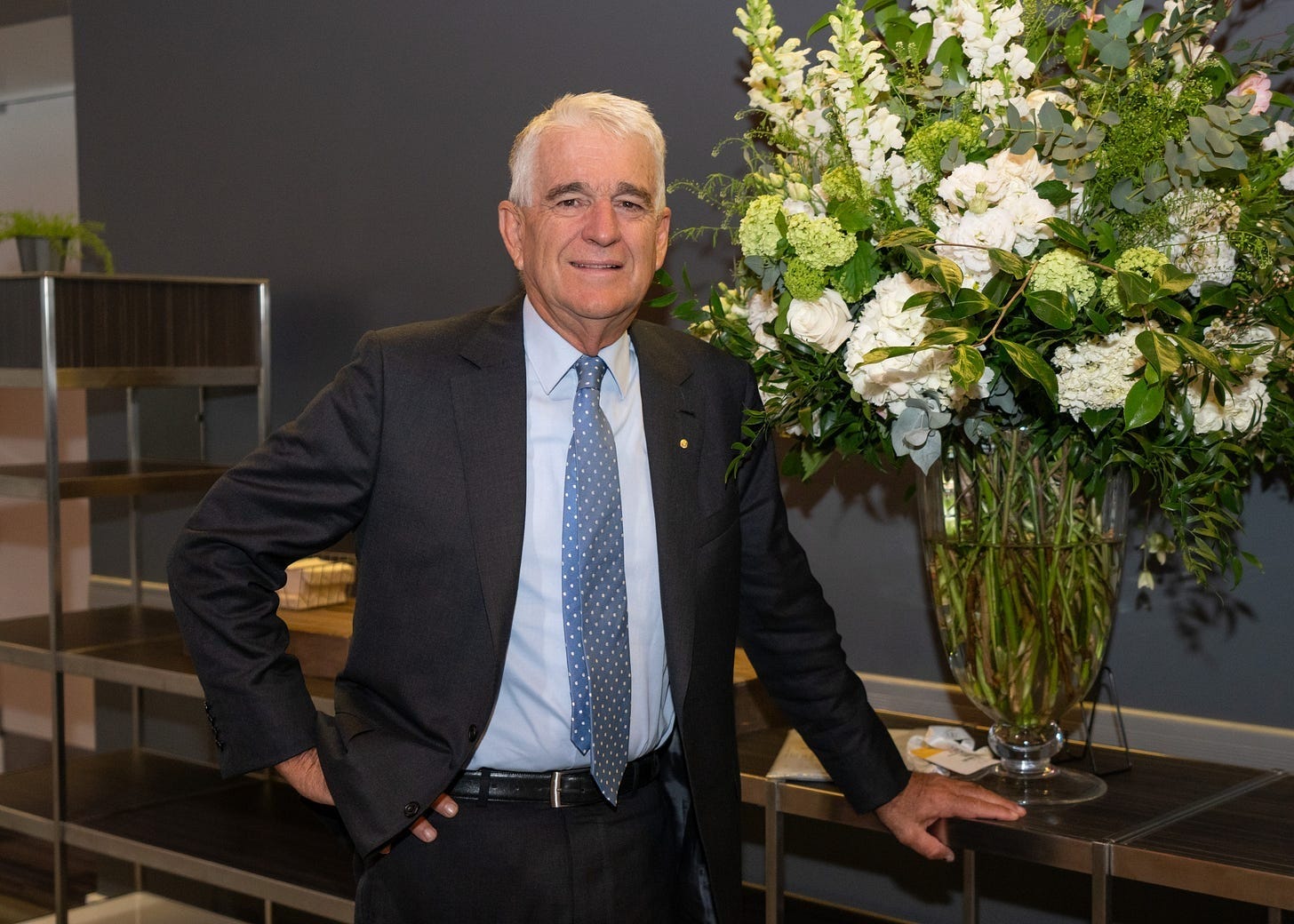
John Anderson, tell us, what was it like growing up in Sydney in the 1960s?
I actually grew up on a farm about 300 miles northwest of Sydney, where my family had lived since the 1830s. We were, I suppose, comfortably off, but it was also very isolated, so I didn’t go into the classroom until I was nine. I was taught with my sister at home around the kitchen table using a correspondence school.
How did you become a Christian?
I became a believer while away at boarding school, after a family tragedy caused me to start to ask very deep questions about the nature of suffering. It was a particularly nasty tragedy, and I was at the epicenter of it- the death of my sister in a sporting accident. And so I really was asking the big questions, like whether pain would end, to be supplanted by joy, and whether the wounds would be bound up. I did not come from a Christian home.
Did you always want to get into politics?
No. I was about eight when Churchill died, and for some unknown reason, my interest in people who lead peaked. Obscure, I know, but for some reason, that’s my earliest consciousness of leadership and the need for it.
At what point in your political career would you say your faith was most tested?
1998. The government I was part of was in crisis. We looked like we were going to lose the election. My constituency bodies were in open revolt, and my wife and I had a surprise additional child that we weren’t expecting but he was born with massive difficulties. He was hospitalised for the first six months of his life. Annus horribilis, or whatever the saying is—that was the year. That was the shocker.
How did God get you through that?
I remember one weekend reaching that point of total and absolute despair on a Sunday afternoon and feeling I could not go on. And it literally was a question of throwing myself on the ground and pleading, and somehow feeling a sense of “yes—you can do this,” of relief, that the desert experience would come to an end. And it did! Sadly, my son died, but it was one of those ones where he’d known such pain and had so many operations on his little six-month-old baby body that it was, in the old-fashioned terminology, a “blessed relief.” Then I had to pull myself together and fight by far the toughest election of the seven that I fought, and against all odds, we won. But I can tell you, by the end of that year, I was exhausted!
The other very tough year was the year of 9/11. I was Acting Prime Minister when that happened. That was the one that was the most chilling, I suppose, because in the midst of it, our Prime Minister was in the U.S. We just didn’t know where it was going to land and what the global implications for both security and the economy would be.
Which of the following characters best reflects your political career: Moses, Nehemiah, or Daniel?
I would not put myself in the company of giants like that under any circumstances.
Yesterday [reffering to last years ARC Conference), you used the metaphor of filling up a car with the wrong fuel. Can you break this parable down for us?
Our civilization has spluttered to a halt because the dynamic—the fuel that made the great engines of freedom work (Judeo-Christian values)—has essentially run out, and we’ve tried to find substitute fuels, the wrong fuels, like secular humanism and the worship of self. These have resulted in the atomisation of society, an inability to find common good, and a determination to defend our patch as though only we know what is right. This scornful approach is tearing our culture apart, and our economy is going down with it.
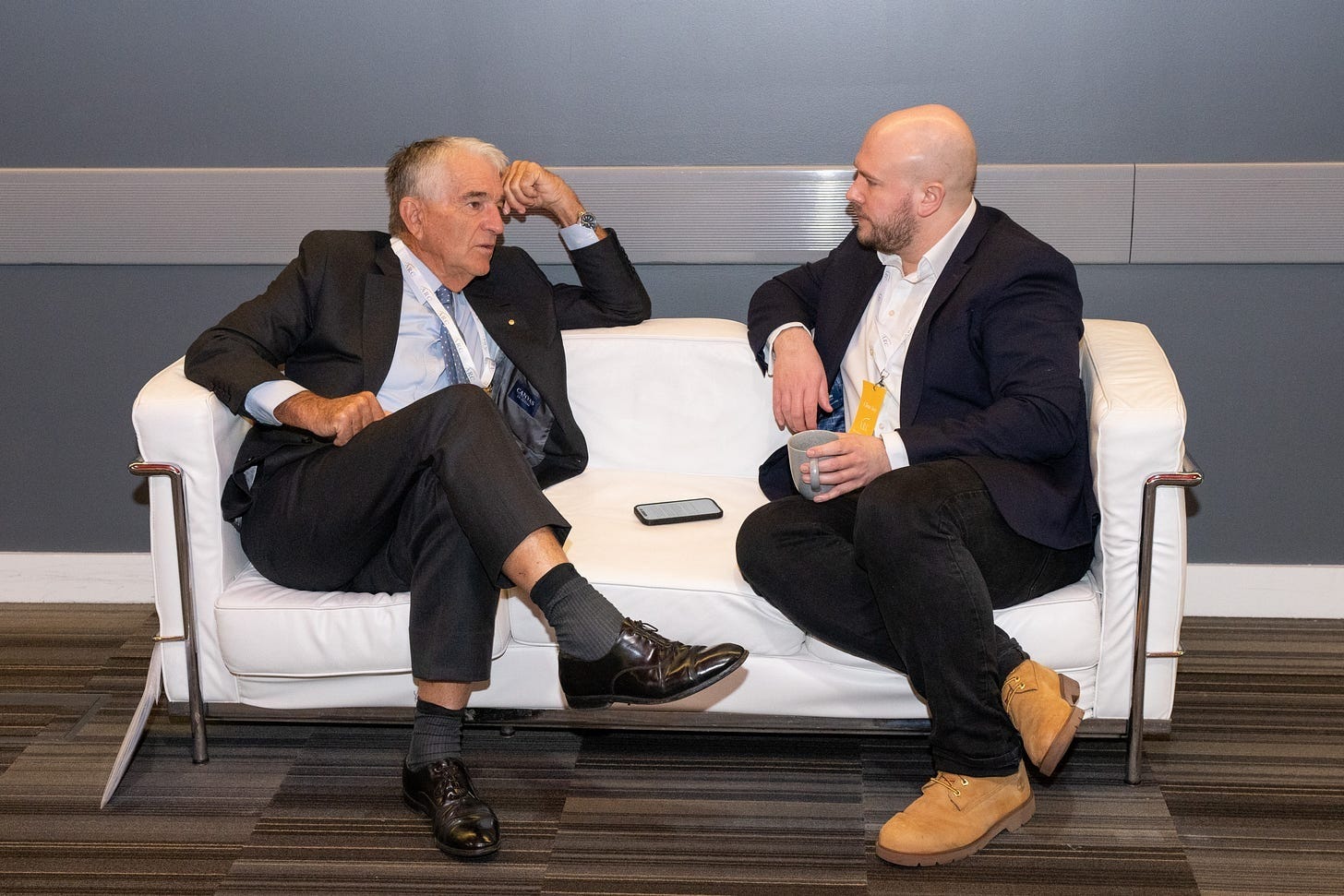
Yesterday, you said politics is tough. What do you mean by that?
It’s a grind. For me, I had an electorate the size of England. So it alone involved immense amounts of time away from home and traveling. And then there’s Canberra for 22 weeks of the year. If you’re going to be a person who stands up for anything, the tensions and the difficulties involved are immense—trying to take people with you who disagree, trying not to compromise your principles, trying not to offend unnecessarily at the same time. It’s a tough gig!
Do you think the younger generation is up to the task?
There’s no use sitting around complaining. We need to ask, What can I reasonably do? We’re disengaged and we’re cynical. It’s like a broken-down horse trying to pull a big cart up the hill, and somehow we think we’ll get better out of it by lashing it mercilessly rather than by sympathising with a poor animal doing its best. One will produce results. The other will not. When you’re actually seriously attempting to have a go yourself, perhaps you’re in a better position to criticize, but not enough people are manning their stations.
You spoke of the hope you have in future young talent. Have you noticed this in the UK at all?
Yes, I have, yes. It’s not just anecdotal. The emerging leaders that we’re going to need—they’re there. They need encouragement. Sometimes they’ll need a kick up the backside, but they are there. I often think about the Oxford Pledge in 1933 that ricocheted around the world when the Oxford Union, by definition young people, overwhelmingly said they would not fight and die for King and Country under any circumstances.
A few short years later, they were manning the Spitfires and the Hurricanes over London. They were bringing the convoys in across the Atlantic. They were manning the munitions factories, and they were fighting in the African desert. Effective leadership, coupled with people’s instinctive desire to do the right thing when they really see the choice they’re stuck with, brought out the best.
Let’s hope we don’t have to stand on the precipice of another global war to bring out the best. But we need it now because our cultures and our economies are in a mess.